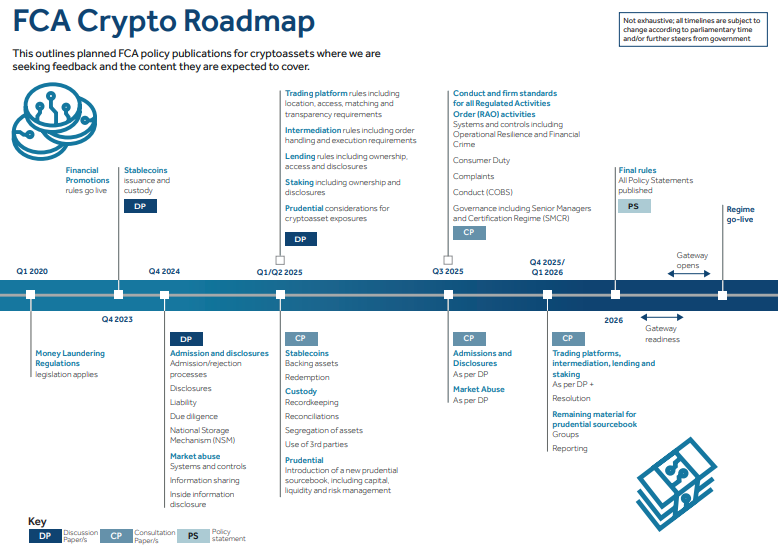
FCA unveils strategic roadmap for cryptocurrency regulation

Current market statistics
It is understood that 12% of UK adults now own cryptocurrency - a figure up by two per cent on last year, with average holdings increasing to £1,842 from £1,595.
While some of this can be attributed to Bitcoin experiencing a significant price movement in that time, it is noted that cryptocurrency awareness in the UK has increased to 93% from 91%.
Regulatory implementation timeline
- Q1/Q2 2025Discussion paper covering:Trading platformsIntermediationLending and staking mechanismsOwnership and disclosure requirementsPrudential requirementsConsultation paper addressing:Stablecoin regulation (backing assets and redemption)Custody requirementsPrudential standards
Key developments and timeline
- Late 2025Broader conduct standardsComprehensive firm requirementsIndustry-wide compliance framework
- 2026Publication of final rulesGateway readiness period for firm authorisation
Consumer behaviour and protection
Investment patterns
Family and friends appear to remain the primary information source, with some 10% of investors admitting to conducting no research before purchasing.
One-third of investors also incorrectly believe FCA provides current protection.
Consumer protection concerns
- Current risksLimited regulatory oversightNo financial protection mechanismsHigh market volatilityPotential for complete capital loss
- Future safeguardsEnhanced market integrity measuresConsumer trust building mechanismsClear regulatory frameworkComplaint handling procedures
FCA's strategic vision
Regulatory objectives
- Market developmentSupport safe competitionEnsure market sustainabilityFoster innovation
- Consumer protectionEnhanced market integrityImproved consumer trustClear regulatory guidelines
- Industry collaborationGovernment partnershipInternational coordinationIndustry stakeholder engagementConsumer feedback integration
Implementation challenges
Key considerations
- Market balanceInnovation support vs. consumer protectionCompetitive environment vs. regulatory oversightInternational alignment vs. national interests
- Operational requirementsAuthorization process developmentSupervision framework establishmentEnforcement mechanism creation
Future implications
Market impact
- Industry developmentEnhanced market stabilityIncreased institutional participationImproved consumer confidence
- Operational changesNew compliance requirementsEnhanced reporting standardsStrengthened risk management
International context
- Alignment with global regulatory standards
- Cross-border cooperation mechanisms
- International market competitiveness
Conclusion
The FCA's comprehensive approach to cryptocurrency regulation marks a significant step toward creating a structured and secure digital asset market in the UK, with a phased implementation timeline from 2025 through to 2026.
Hopefully, this demonstrates a careful balance between fostering innovation and ensuring consumer protection.
Key success factors will include:
- Effective industry collaboration
- Clear regulatory guidelines
- Strong consumer protection measures
- Balanced market development
This framework looks like it aims to position the UK as a leading jurisdiction for cryptocurrency operations while maintaining robust consumer protection standards.
The success of this initiative will depend on continued engagement between regulators, industry participants, and consumers to create a sustainable and trustworthy cryptocurrency ecosystem.