
DCW DAILY BRIEF-Global Digital Assets, ScienceTech & Web3 Market Intelligence
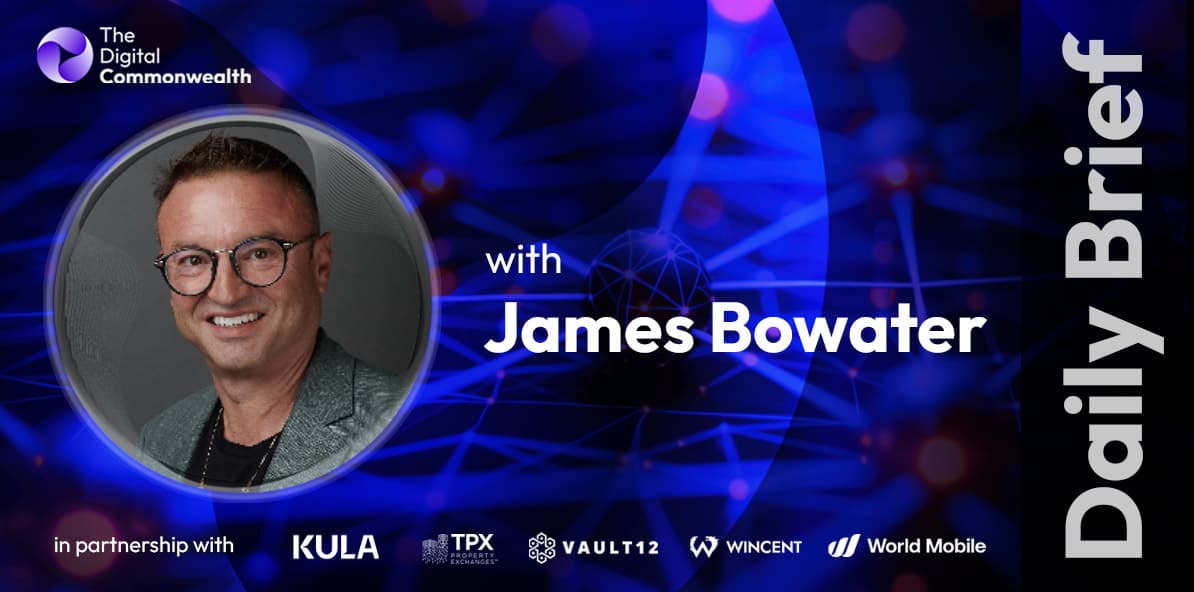
DCW DAILY BRIEF
Global Digital Assets, ScienceTech and Web3 Market Intelligence
Date: Tuesday 28th July 2026 | Edition 499
In partnership with Kula | TPX Property Exchanges | Vault12 | Wincent | World Mobile
James Bowater
linkedin.com/in/james-bowater-b47612 | Twitter/X: X.com@JamesBowater
📊 EXECUTIVE SUMMARY
Iran War Day 151 opens Tuesday 28th July 2026 with global markets gripped by a fresh rout in semiconductor stocks, as mounting doubts over the returns on billions of dollars of artificial intelligence spending rippled from Wall Street into Asia overnight. South Korea's Kospi Index, a bellwether for AI-linked investment, sank as much as 9.4 percent before paring losses, with memory giants Samsung Electronics and SK Hynix plunging as much as 13.4 and 14 percent respectively; SK Hynix's US-listed shares closed 7.5 percent lower on Monday, dipping below their initial public offering price for the first time since debuting this month. Japan's Nikkei 225, Taiwan's benchmark and the broader MSCI Asia Pacific gauge all fell around 3 to 4 percent, while US equity futures pointed modestly lower, with Dow futures up just 30 points, or 0.06 percent, S&P 500 futures down 0.1 percent and Nasdaq 100 futures off 0.5 percent, following Monday's mixed close in which the Dow gained 0.51 percent to 52,210.08 and the S&P 500 added 0.02 percent to 7,413.18, while the Nasdaq Composite slipped 0.18 percent to 24,932.08. Oil extended its slide, with Brent crude falling toward $87 a barrel after tumbling 8.7 percent on Monday to $88.36, its steepest one-day drop in more than three months, as the US-Iran pause in strikes entered a third day; gold, however, slipped for a second consecutive session to challenge $4,050 an ounce, as dollar demand ahead of the Federal Reserve's two-day meeting offset any safe-haven bid from the chip-driven selloff. Bitcoin retreated to the low $63,000s, down 2.82 percent over 24 hours, with Ethereum, XRP, Solana, Cardano and Dogecoin all posting sharper losses as the broader crypto market capitalisation fell 1.6 percent to roughly $2.26 trillion and the Fear and Greed Index slipped to 29. On the geopolitical front, Israeli Prime Minister Benjamin Netanyahu meets President Trump at the White House on Tuesday for the first time since the Iran war began in late February, with mediators from Pakistan, Egypt and Qatar reportedly close to a proposal that could revive the US-Iran memorandum of understanding over Strait of Hormuz operations; Trump separately hosts Ukrainian President Volodymyr Zelensky the same day. The Federal Open Market Committee begins its two-day policy meeting on Tuesday, with a decision due Wednesday, while in Washington the Senate's attention has turned to a Russia sanctions bill and the funeral of the late Senator Lindsey Graham, pushing the CLARITY Act's next procedural step, a possible cloture filing, later into the week. Separately, Moonshot AI's full release of its Kimi K3 model weights sent Chinese AI rivals tumbling, with Z.ai shares down as much as 30 percent in Hong Kong trading, MiniMax off 16 percent and Alibaba down 4 percent, as Washington's Entity List debate over the Beijing lab intensifies. Five dominant narratives define Tuesday 28th July: (1) AI Capex Doubts Trigger Fresh Global Chip Stock Rout as Kospi Sinks Nearly 9 Percent; (2) Netanyahu Meets Trump at the White House for First Talks Since the Iran War Began; (3) Federal Reserve Opens Two-Day Meeting as Bitcoin and Wall Street Await Wednesday's Verdict; (4) Kimi K3's Full Release Sends Chinese AI Rivals Tumbling Amid Washington Sanctions Debate; (5) Senate Turns to Russia Sanctions and Graham's Funeral, Pushing the CLARITY Act Vote Later This Week.
🔥 HOT OFF THE PRESS
AI Capex Doubts Spark Fresh Chip Stock Rout as Kospi Sinks Nearly 9 Percent, Samsung and SK Hynix Plunge Double Digits
A selloff in global semiconductor stocks deepened sharply on Tuesday as investors questioned the sustainability of the artificial intelligence investment boom, dragging South Korea's Kospi Index down as much as 9.4 percent and forcing the Korea Exchange to weigh trading curbs before the index pared some of its losses. Samsung Electronics and SK Hynix, which together account for nearly half the Kospi's weighting, plunged as much as 13.4 and 14 percent respectively, while Japan's flash memory maker Kioxia Holdings slumped nearly 18 percent and Taiwanese chip designer MediaTek fell more than 9 percent; Tokyo Electron, Advantest and SoftBank Group, a major AI investment proxy through its stake in Arm, all declined sharply, and Taiwan's TSMC slipped more than 2 percent. "We seem to be at the despair part of the selloff, where tech investors are rushing for the exit because the Nasdaq says so," said Matt Simpson, senior analyst at StoneX, while Acadian Asset Management's Owen Lamont told CNBC that "no one has any idea how this AI process is going to affect our economy, and so I think it's going to be rocky no matter what." The rout follows another weak Wall Street session on Monday, when fresh concerns that circular AI financing arrangements between hyperscalers and chipmakers could unravel if capital expenditure plans are scaled back weighed on Micron, Nvidia, Sandisk, AMD and SK Hynix's US-listed shares.
Netanyahu Meets Trump at the White House for First Talks Since Iran War Began, as Mediators Eye Hormuz Breakthrough
Israeli Prime Minister Benjamin Netanyahu meets President Donald Trump at the White House on Tuesday for the eighth time since Trump's return to office, and their first in-person talks since the Iran war began with US-Israeli strikes in late February. Mediators from Pakistan, Egypt and Qatar are reportedly close to a proposal that would clarify disputed operations of the Strait of Hormuz under the US-Iran memorandum of understanding, whose 60-day timeline is already running, though a final decision awaits Trump's assessment following the Netanyahu meeting, according to sources cited by the Times of Israel. "This is a great privilege, but it is also a great responsibility," Netanyahu said before departing Israel on Monday, while relations between the two leaders, occasionally strained in recent months, have been deliberately toned down ahead of the visit. Tuesday's talks are expected to be dominated by the war, with Washington signalling it wants to give negotiations a chance after the weekend's pause in hostilities; Trump separately hosts Ukrainian President Volodymyr Zelensky the same day, underlining the breadth of the diplomatic calendar even as the Federal Reserve opens its own two-day policy meeting.
📖 QUICK READ
Tuesday 28th July 2026, Iran War Day 151, sees Bitcoin trading in the low $63,000s, down 2.82 percent over 24 hours, with Ethereum at $1,872.11, down 3.52 percent, XRP at $1.05, down 4.44 percent, Solana at $73.08, down 4.08 percent, Cardano trading near $0.155 and Dogecoin holding around $0.072, as total crypto market capitalisation falls 1.6 percent to roughly $2.26 trillion on volume of $65.7 billion and the Fear and Greed Index slips to 29 from 30.
A deepening rout in semiconductor stocks dominates trading after doubts over artificial intelligence spending returns sent South Korea's Kospi down as much as 9.4 percent and dragged Samsung and SK Hynix into double-digit declines; US equity futures point modestly lower ahead of the open, oil extends its slide toward $87 a barrel, and gold slips for a second session to challenge $4,050 as dollar demand offsets safe-haven flows heading into the Federal Reserve's two-day meeting.
Israeli Prime Minister Benjamin Netanyahu meets President Trump at the White House on Tuesday for their first talks since the Iran war began, with mediators reportedly close to a Hormuz proposal; the Federal Open Market Committee begins its two-day meeting with a decision due Wednesday, Microsoft and Meta report earnings the same day, Apple and Amazon follow Thursday alongside the Bank of England's rate decision, and the Senate turns to a Russia sanctions bill and Senator Lindsey Graham's funeral this week, pushing any CLARITY Act cloture filing beyond Tuesday.
💬 QUOTE OF THE DAY
"The four most dangerous words in investing are: 'this time it's different.'"
~ attributed to Sir John Templeton
📰 TODAY'S HEADLINES
💹 MARKETS
Asian Markets Tumble as Chip Stock Rout Deepens; US Futures Point Modestly Lower Ahead of Fed Week
Asian equities fell sharply on Tuesday as the AI-driven selloff in chipmakers that began on Wall Street spread through the region, with the MSCI Asia Pacific equity gauge slipping around 3 percent and South Korea's Kospi, Japan's Nikkei 225 and Taiwan's benchmark all posting steep declines. US stock futures pointed only modestly lower by comparison, with Dow futures up about 30 points, or 0.06 percent, S&P 500 futures down 0.1 percent and Nasdaq 100 futures off 0.5 percent, as traders weighed the chip rout against the busiest week of the earnings season and Wednesday's Federal Reserve decision. Monday's regular session had closed mixed, with the Dow Jones Industrial Average gaining 262.83 points, or 0.51 percent, to 52,210.08, the S&P 500 adding just 0.02 percent to 7,413.18, and the Nasdaq Composite slipping 0.18 percent to 24,932.08 as the VanEck Semiconductor ETF lost more than 2 percent; AMD and Teradyne dropped 5 and 4 percent respectively, while Micron shed about 2 percent, even as chipmakers had briefly rallied earlier in the session following Chinese chipmaker CXMT's blockbuster Shanghai IPO. Bonds extended their rally as the chip selloff drove renewed demand for havens, with the ten-year US Treasury yield easing further from last week's 18-month high, while oil's continued retreat added to the disinflationary backdrop heading into the Federal Reserve's two-day meeting.
📈 MARKET OVERVIEW TOTAL CRYPTO MARKET CAP: APPROXIMATELY $2.26 TRILLION | Tuesday 28th July 2026
The digital asset complex retreated on Tuesday alongside the broader equity selloff, with total crypto market capitalisation falling 1.6 percent over 24 hours to roughly $2.26 trillion on trading volume of approximately $65.7 billion, according to CoinMarketCap data cited by CoinGabbar, as Bitcoin's dominance held near 56 percent of the total market and Ethereum's share stood at 9.98 percent. Sentiment softened for the first time in several sessions, with the Crypto Fear and Greed Index slipping to 29 from 30 a day earlier, remaining in Fear territory as Monday's relief rally following the US-Iran pause gave way to fresh caution ahead of Wednesday's Federal Reserve decision. Polkadot and assets across the XRP Ledger ecosystem were again among the session's largest gainers even as the majors slid, underlining a continued rotation into altcoin-linked infrastructure plays that has now persisted through several sessions of broader market weakness.
₿ BITCOIN (BTC) approx $63,000-$63,300
Bitcoin slipped to $63,173.20 on Tuesday, down 2.82 percent over 24 hours, according to CoinMarketCap data, retreating from Monday's Sunday-night high near $65,500 as the relief rally following the US-Iran pause faded and traders repositioned ahead of Wednesday's Federal Reserve decision. The pullback comes as US spot Bitcoin ETFs enter the test with fragile momentum: after a three-week inflow streak, net flows slowed to just $33 million last week, a marked deceleration from the $75.7 million and $197.4 million recorded in the two preceding weeks, leaving 2026 flows still roughly $4.5 to $4.8 billion in the red for the year. Citigroup research estimates that ETF flows now account for approximately 45 percent of weekly Bitcoin price moves, meaning Wednesday's Fed statement, and in particular whether Chair Kevin Warsh delivers a genuine hold rather than a hawkish one, is likely to determine whether the tentative three-week recovery in flows extends or reverses; nine of eighteen FOMC officials projected at least one 2026 rate hike as of the June meeting, though the weekend's sharp fall in oil prices has materially eased the case for a hawkish surprise since then.
The CLARITY Act remains the key legislative catalyst for a more decisive re-rating, though its path has grown more uncertain: Senate Majority Leader John Thune is prioritising a Russia sanctions bill named for the late Senator Lindsey Graham and the Senate's attention this week to Graham's funeral services, pushing any cloture filing on the crypto market structure bill beyond Tuesday, according to CoinDesk reporting. Polymarket traders currently assign the bill roughly a 33 percent chance of becoming law in 2026, with Galaxy Research's estimate at 30 percent. Bitcoin's 100-day exponential moving average near $68,000 remains the key technical battleground identified by traders through recent sessions, with a decisive break above it opening the path toward $72,000 to $75,000, while a renewed flare-up in the Middle East or a hawkish Fed surprise risks a retest of the low $60,000s. Support $61,000-$63,000; resistance $65,000-$68,000.
⧮ ETHEREUM (ETH) approx $1,850-$1,875
Ethereum fell to $1,872.11 on Tuesday, down 3.52 percent over 24 hours, retreating from Monday's two-month high above $1,970 as the network's near-term technical picture reversed sharply alongside the broader risk-off tone driven by the chip stock selloff. The pullback masks continued strengthening beneath the surface: on-chain staking has reached a record 34 percent of circulating supply, with 41.04 million ETH, worth roughly $77.7 billion at current prices, now locked in staking even as stakers earn a reduced 2.62 percent yield, down from 3.05 percent, as issuance ticked up from 0.757 percent to 0.842 percent. Liquid staking protocol Lido has begun migrating more than eight million staked ETH following Ethereum's Pectra upgrade, a move aimed at reducing validator counts and improving network efficiency, while the validator exit queue that once forced a 45-day wait to unstake has emptied entirely even as more than 2.5 million ETH queue to enter staking, creating a 44-day activation delay that reflects deepening long-term holder conviction.
Spot Ethereum ETFs continued to outpace Bitcoin funds through the week to 24th July, attracting $103.9 million against $33.79 million for Bitcoin products, the third consecutive week of net inflows for both categories, according to data reported by CoinDesk. Ethereum's share of total value locked across decentralised finance protocols held near its recent high following last week's surge, with the network's share of DeFi TVL at roughly 54 percent as rivals Solana, Tron and Base lagged behind. Analysts continue to watch whether Ethereum can hold above the $1,800 to $1,826 range that has provided support through recent volatility, with a renewed push above $1,933 needed to challenge the two-month high. Support $1,800-$1,826; resistance $1,900-$1,960.
🔷 XRP approx $1.03-$1.08
XRP fell to $1.05 on Tuesday, down 4.44 percent over 24 hours, extending its slide below the $1.08-$1.14 range that had held through recent sessions as the broader crypto market retreated ahead of the Federal Reserve's meeting. The decline comes despite continued technical progress on the XRP Ledger, which is nearing completion of version 3.2.0 with roughly two-thirds of validators already upgraded; development proposals including an AMM Swappable Curves feature, aimed at improving capital efficiency for automated market makers on the ledger, remain under active discussion among the network's developer community. Spot XRP ETFs held roughly $1 billion in net assets as of the most recent data, with cumulative net inflows since launch of approximately $1.49 billion, though weekly flows have grown increasingly inconsistent, with several recent sessions recording zero net activity.
Ripple's institutional infrastructure build-out continues to progress independently of price action, following last week's disclosure that more of Ripple's RLUSD stablecoin now resides on the XRP Ledger than on Ethereum for the first time, alongside full Markets in Crypto-Assets authorisation across the European Economic Area. Whales and sharks holding between 100,000 and 100 million tokens have continued accumulating through the recent volatility, a pattern that has historically preceded periods of price strength once the broader market stabilises, though traders note that a sustained move above $1.10 remains necessary to signal a more convincing recovery rather than another range-bound bounce. Support $1.00-$1.05; resistance $1.08-$1.14.
◎ SOLANA (SOL) approx $72-$74
Solana fell to $73.08 on Tuesday, down 4.08 percent over 24 hours, giving back part of its recent outperformance as the broader market retreated, though the token continues to build a pattern of higher lows since June's steep decline toward the low $60s. Institutional infrastructure around the network deepened further last week: Morgan Stanley's spot Solana ETF, ticker MSOL and carrying a proposed 0.14 percent fee, received NYSE Arca approval on 24th July, joining Bitwise and Fidelity's existing spot products, while Grayscale separately updated its filing for a proposed Solana staking ETF that would distribute periodic staking rewards to shareholders. Network activity remains robust, with roughly 18 million weekly active addresses and close to $5 billion in total value locked, while Solana's real-world asset inflows have reached $1.6 billion, pointing to sustained institutional capital entering the ecosystem even as SOL trades well below its January highs.
The Alpenglow consensus upgrade remains the network's most closely watched near-term catalyst, with validator testing continuing under SIMD-0326 ahead of a targeted mainnet rollout that developers now place between late August and October 2026. The overhaul replaces Proof of History and TowerBFT with Votor and Rotor protocols, aiming to cut transaction finality from roughly 12.8 seconds to as little as 100-150 milliseconds, a change co-founder Anatoly Yakovenko has described as central to Solana's push into institutional payments and tokenised real-world assets. Support $70-$73; resistance $76-$80.
🔺 CARDANO (ADA) approx $0.153-$0.160
Cardano traded near $0.155 on Tuesday, continuing to consolidate below the $0.1649-$0.1656 support zone it broke last Friday, as the token remains under pressure alongside the broader market and trades roughly 95 percent below its September 2021 all-time high of $3.09. Founder Charles Hoskinson used a recent X AMA to insist Cardano's "best days are ahead" despite the network's fall out of the top ten cryptocurrencies by market capitalisation, arguing that the project's on-chain treasury, funded through a share of network revenue and protocol inflation, can deploy more than $100 million toward ecosystem development this year, spanning software development, infrastructure upgrades, research, developer tools and education programmes; Hoskinson noted that between 30 and 40 companies have already received support, reducing the ecosystem's reliance on Input Output Global.
The comments follow a public clash with Ark Invest's director of research, Lorenzo Valente, who argued the industry damages its own credibility by continuing to spotlight Cardano and Hoskinson at conferences and podcasts, a criticism Hoskinson dismissed as personal bias; the network's dispute with Ethereum developers over the origins of native UTXO research, which Hoskinson has characterised as an attempt to copy Cardano's Extended Unspent Transaction Output architecture, remains a live undercurrent in the rivalry between the two ecosystems. Analysts note whales continue accumulating ADA even as retail sentiment sours, with a breakout above $0.20 seen as the level required to confirm a bullish reversal toward $0.23. Support $0.145-$0.155; resistance $0.163-$0.175.
💕 DOGECOIN (DOGE) approx $0.069-$0.073
Dogecoin traded near $0.072 on Tuesday, holding within the tight range that has capped the token for much of July as it continues to struggle to reclaim the $0.075-$0.087 resistance band that has limited prior recovery attempts. The token's clearest fundamental development this month came on 1st July, when House of Doge, the official corporate arm of the Dogecoin Foundation, completed its merger with Brag House Holdings and began trading on Nasdaq under the ticker HODO, giving the Dogecoin ecosystem direct access to US public equity capital markets for the first time to pursue payments, digital-asset treasury management, real-world asset tokenisation and professional sports initiatives. DOGE Pay, the merchant checkout system launched in partnership with MoonPay, has expanded to more than 6,000 merchants at a 1 percent processing fee competitive with traditional card rates, with a fuller rollout targeted for the third quarter.
Institutional demand remains the missing ingredient in the token's recovery story: the two US Dogecoin ETFs, the REX-Osprey DOJE fund and 21Shares' TDOG, have recorded close to zero net capital inflows for several consecutive weeks, holding a combined roughly $20 million in assets that have barely grown since launch, underlining a continued gap between live institutional access and actual institutional demand. On-chain data continues to show large wallets accumulating even as directional conviction remains weak across the meme coin sector more broadly, with whale holdings climbing to a record concentration even as the token's market capitalisation math means a move toward $0.15 would require another roughly $10 billion of fresh capital. Support $0.069-$0.072; resistance $0.073-$0.078.
😱 Crypto Fear and Greed Index: Sentiment Slips Back Into Deeper Fear as Chip Rout Overshadows Iran Relief Rally; BTC approx $63,000-$63,300; Total Market Cap Approx $2.26 Trillion
The Crypto Fear and Greed Index eased to 29 on Tuesday from 30 a day earlier, remaining in Fear territory as Monday's relief rally following the US-Iran pause gave way to fresh caution ahead of Wednesday's Federal Reserve decision and the deepening rout across AI-linked semiconductor stocks. The reading has nonetheless improved four points from 25 a week ago and 11 points from 18 a month ago, suggesting the underlying trend remains one of gradual, if uneven, recovery from the acute panic that gripped markets earlier in July. Traders are likely to look to Wednesday's Fed statement and Wall Street's response to the AI capex jitters for confirmation before committing fresh capital at scale, with sentiment likely to remain range-bound between Fear and Neutral until one of those two catalysts resolves decisively in either direction.
🏛 Traditional Markets Context
Tuesday 28th July 2026 follows a mixed Monday session in which the Dow Jones Industrial Average gained 0.51 percent to close at 52,210.08, the S&P 500 added just 0.02 percent to 7,413.18, and the Nasdaq Composite slipped 0.18 percent to 24,932.08 as semiconductor stocks weighed on the broader tape even as they bounced off session lows. US equity futures pointed only modestly lower into Tuesday's open, with Dow futures up around 30 points, S&P 500 futures down 0.1 percent and Nasdaq 100 futures off 0.5 percent, as the overnight chip rout in Asia proved sharper than the moves priced into US contracts. In the United Kingdom, the Bank of England holds its Bank Rate at 3.75 percent ahead of Thursday's 30th July meeting, where a new Monetary Policy Report and press conference are due; the Monetary Policy Committee's June vote split 7-2 in favour of holding, with chief economist Huw Pill and external member Megan Greene both voting for a hike to 4 percent, and markets continue to weigh whether elevated services inflation at 3.7 percent will tip the balance toward a rate rise later this year. The European Central Bank held its deposit rate at 2.25 percent last Thursday, and the Bank of Japan remains at 1.0 percent, while the ten-year US Treasury yield extended its retreat from last week's 18-month high near 4.70 percent as the chip-driven flight to safety added to the disinflationary impulse from falling oil prices heading into Wednesday's Federal Open Market Committee decision.
🏢 INSTITUTIONAL & CORPORATE
Netanyahu-Trump White House Summit Headlines Diplomatic Calendar as Big Tech Earnings Supercycle Looms
Israeli Prime Minister Benjamin Netanyahu's White House meeting with President Trump on Tuesday, their first in-person talks since the Iran war began in late February, is expected to dominate the diplomatic calendar, with the encounter marking the eighth meeting between the two leaders since Trump's return to office and the one with the most extensive access of any foreign leader currently enjoying with the administration. Trump separately hosts Ukrainian President Volodymyr Zelensky the same day, while Irish Taoiseach Micheal Martin hosts German Chancellor Friedrich Merz in a parallel set of European talks, and Peru's Keiko Fujimori is sworn in as president. On Wall Street, the busiest week of the second-quarter earnings season formally opens, with Microsoft and Meta Platforms both reporting after Wednesday's market close and Apple and Amazon following on Thursday, alongside more than 150 other S&P 500 companies; Microsoft's fiscal fourth-quarter results will be scrutinised for Azure cloud growth against management's 39-40 percent constant-currency guidance, with the chip stock selloff of the past 24 hours only heightening investor focus on whether AI infrastructure spending, modelled near $262 billion for fiscal 2027 by some analysts, is translating into monetisation. Separately, UK blue-chips take their turn this week, with AstraZeneca, GSK, Unilever, Barclays and Rolls-Royce among the FTSE 100 constituents reporting half-year results.
⚖️ REGULATORY & POLICY
Senate Turns to Russia Sanctions and Graham's Funeral, Delaying CLARITY Act Cloture Filing Beyond Tuesday
The Digital Asset Market CLARITY Act's next procedural step has slipped later into the week, as Senate Majority Leader John Thune has prioritised a bipartisan Russia sanctions and tariffs bill, dedicated to the late Senator Lindsey Graham, and the chamber's attention this week to Graham's funeral services in Washington and South Carolina, according to CoinDesk reporting citing Senate scheduling. Republican Senator Dave McCormick nonetheless pressed publicly on Monday for a floor vote before the August recess, telling reporters "the time for delay is over" and calling on colleagues to "bring the CLARITY Act to the Senate floor for a vote and let every senator go on the record." Separately, FXStreet reported Tuesday that Thune is expected to move toward filing cloture on the motion to proceed to the bill, according to a report by Eleanor Terrett, with the revised text incorporating temporary ethics restrictions on digital asset activity by senior federal officials aimed at satisfying Democratic holdouts including Senators Ruben Gallego and Angela Alsobrooks. A successful cloture vote would require 60 votes, meaning Republicans need roughly seven Democratic defections given the chamber's 53-47 split; Polymarket traders currently price the bill's chances of becoming law in 2026 at about 33 percent, while Franklin Templeton has separately urged Congress to approve the legislation, arguing clearer rules would improve investor protection and provide businesses with stable operating rules.
📦 COMMODITIES
🥇 Gold: Trading approx $4,040-$4,060/oz
Gold challenged the $4,050 level early Tuesday, extending a pullback from above $4,100 and trading lower for a second consecutive session, undermined by renewed dollar demand ahead of the Federal Reserve's two-day policy meeting even as the chip stock selloff drove a flight to safety elsewhere in markets. The metal's failure to catch a haven bid from Tuesday's equity rout underlines a pattern that has held through much of 2026: gold increasingly trades off rate expectations rather than pure geopolitical risk, with COMEX speculators having added 4,438 contracts to their net long position in the week to 21st July, bringing the total to 123,586 contracts, while central banks purchased a net 244 tonnes in the first quarter, exceeding both the prior quarter and the five-year average. Wednesday's Federal Reserve decision will test whether the metal can stabilise above current levels; a genuinely balanced hold from Chair Warsh would likely support renewed buying, while a hawkish surprise risks a deeper retreat toward the $3,990-$4,040 support band. Key support $3,990-$4,040; resistance $4,100-$4,160.
🛢️ Brent Crude: approx $86-$88/bbl
Brent crude extended its slide toward $87 a barrel on Tuesday, building on Monday's 8.7 percent collapse to $88.36, the steepest one-day decline in more than three months, as the US-Iran pause in strikes entered a third consecutive day without either side formally confirming a ceasefire. West Texas Intermediate fell to a similar degree, settling near $82.61 on Monday after tumbling 7.5 percent. Iran has stated it has not requested renewed peace talks with the United States and has stressed that the current halt does not represent a formal ceasefire, according to reporting cited by CoinGabbar, underlining the fragility of the de-escalation that Tuesday's Netanyahu-Trump meeting could either reinforce or unwind. Brent remains up more than 20 percent for the month despite the retreat, according to Trading Economics data, and traders cautioned that any resumption of hostilities before the Fed's Wednesday decision could sharply reverse the week's disinflationary tailwind. Key support $83.00-$86.00; resistance $88.00-$92.00.
🟠 Copper: Near $6.25-$6.35/lb
Copper eased to $6.31 a pound on Tuesday, down 0.69 percent over 24 hours, according to Trading Economics data, giving back a portion of last week's gains as the broader risk-off tone in equity markets weighed on industrial metals even as underlying Chinese supply tightness continues to provide a structural floor. The metal continues to track the pending US Commerce Department report on potential import tariffs for refined copper, while a Chinese crackdown on VAT fraud that tightened refined copper availability earlier in the month remains a supportive factor for prices over the medium term.
⚪ Silver: Trading approx $57.00-$58.00/oz
Silver eased alongside gold on Tuesday to trade near $57.50 an ounce, giving back part of its recent breakout above key resistance as the same dollar demand weighing on bullion ahead of the Federal Reserve's meeting also capped the white metal, even as its industrial demand base spanning solar panels, electric vehicles and AI data centres continues to provide structural support; the silver market remains on track for its sixth consecutive annual supply deficit in 2026, with demand expected to outpace supply by more than 46 million ounces, according to the Silver Institute's World Silver Survey. Key support $56.00-$57.00; resistance $58.50-$59.80.
🥇 Platinum: Trading approx $1,610-$1,625/oz
Platinum held near $1,617 an ounce on Tuesday, broadly tracking the softer tone across precious metals as the sector consolidates recent gains. The World Platinum Investment Council's forecast of a fourth consecutive annual market deficit in 2026, driven by constrained mine supply and elevated energy costs, remains the structural anchor for the medium-term bull case, with Sibanye-Stillwater's planned advance of seven new mining projects not expected to add production until next year.
📝 MARKET NARRATIVE & ANALYSIS
Tuesday 28th July 2026 is Iran War Day 151, and the day's dominant theme is a sharp reassertion of AI capex anxiety over Monday's geopolitical relief rally: the same investors who spent the weekend unwinding a stagflation scare built on Iran-driven oil prices have woken up to a very different worry, that the trillions of dollars committed to artificial intelligence infrastructure by hyperscalers and memory chipmakers alike may not generate the returns currently priced into their valuations. That the Kospi's near 9 percent intraday decline dwarfs the modest 0.1 to 0.5 percent moves in US futures is itself instructive: American investors have so far treated Monday's Wall Street weakness as a continuation of an established pattern rather than a fresh shock, while Asian markets, more directly exposed to the memory chip supply chain feeding Nvidia's AI buildout, are repricing far more violently. That divergence sets up Wednesday's Federal Reserve decision and the Microsoft and Meta earnings that follow it as the week's genuine swing factor: a Fed hold read as balanced, combined with cloud growth numbers that validate current capital expenditure guidance, could stabilise the chip complex quickly, while a hawkish surprise landing on top of an already-fragile AI trade risks compounding into a much larger drawdown. Bitcoin's retreat to the low $63,000s and Ethereum's pullback from its two-month high both read as risk-off moves in sympathy with equities rather than crypto-specific developments, a reading reinforced by the fact that ETF flow deceleration, not fresh redemptions, is doing most of the work. Cardano's Hoskinson using a public AMA to insist the network's "best days are ahead" while trading 95 percent below its all-time high, and the CLARITY Act's cloture filing sliding behind a Russia sanctions bill and a Senate funeral, are both reminders that crypto's regulatory and narrative catalysts continue to move on Washington's calendar rather than the market's. With Netanyahu due at the White House and the Federal Reserve entering its blackout-adjacent meeting the same day, Tuesday concentrates an unusually large share of the week's genuine uncertainty into a single 24-hour window.
💸 STABLECOINS, TOKENISATION & REGULATORY FRAMEWORKS
Samsung Clarifies Stablecoin Plans as GENIUS Act Rulemaking Continues Past Statutory Deadline
Samsung said on Tuesday that USDC appeared only as a demonstration in its recent Samsung Wallet presentation, clarifying that official stablecoin partners for native wallet integration have not yet been finalised, according to CoinGabbar reporting, tempering earlier market enthusiasm around the South Korean electronics giant's planned entry into stablecoin transfers. The clarification lands as federal rulemaking under the GENIUS Act remains unfinished more than a week past its 18th July statutory deadline, with the Office of the Comptroller of the Currency, FDIC, Treasury, FinCEN and OFAC having published ten proposed rules between them but none yet finalised; the FDIC's Bank Secrecy Act and sanctions proposal remains open for comment through 4th August, with a joint Customer Identification Programme proposal running through 21st August. The American Bankers Association and Independent Community Bankers of America have separately pressed senators for clarity on stablecoin yield restrictions, arguing that payment stablecoins must remain transaction tools rather than substitutes for insured bank deposits, a debate that continues to shadow both the GENIUS Act's implementation and the broader CLARITY Act negotiations.
🤖 TECHNOLOGY, AI & INNOVATION
Moonshot AI Completes Kimi K3 Weight Release as Chinese AI Rivals Tumble and Washington Weighs Entity List Action
Moonshot AI completed the release of its Kimi K3 model, publishing the full weights and an accompanying technical report on Hugging Face and GitHub late on 27th July, roughly a day ahead of its own target date, confirming the 2.8 trillion-parameter Mixture-of-Experts model as the largest open-weight AI system publicly available. Hugging Face chief executive Clem Delangue said the release hit the top of the platform's trending chart with more than 4,000 likes within 30 minutes, calling it the fastest release growth the platform has seen; the technical report details a new Kimi Delta Attention and Attention Residuals architecture combined with a Stable LatentMoE framework activating 16 of 896 experts, which Moonshot says delivers a 2.5-times improvement in scaling efficiency over its predecessor. On pricing, Moonshot says Kimi K3 costs $3 per million input tokens, against $10 for Anthropic's Claude Fable 5 and $5 for OpenAI's GPT-5.6 Sol, positioning the model as both highly capable and substantially cheaper to run, with developers already reporting it running on consumer-grade hardware such as arrays of 80 RTX 5090 GPUs.
The release triggered a sharp reaction among Moonshot's Chinese AI rivals, with Z.ai shares losing as much as 30 percent of their value in Hong Kong trading, MiniMax Group falling as much as 16 percent, and Alibaba dropping 4 percent, as investors repriced the competitive threat from Moonshot's aggressive open-weight strategy. The release lands amid an intensifying Washington debate over Chinese AI labs' access to export-controlled hardware, after the White House alleged Moonshot covertly accessed banned Nvidia GB300 servers via Thailand and Treasury Secretary Scott Bessent warned that sanctions and Entity List designation remain live options; enforcement measures under consideration are aimed at restricting cloud API access and federal procurement rather than clawing back weights already downloaded, since sanctions cannot recall a model mirrored globally within hours of publication. A 25-firm coalition led by Nvidia's Jensen Huang has pushed back against proposals to restrict open-weight model releases more broadly, arguing such restrictions would cede ground to exactly the kind of rapid, low-cost model Moonshot has just shipped.
🌍 GLOBAL MONETARY POLICY & MACROECONOMICS
The Federal Reserve's Federal Open Market Committee opens its two-day meeting on Tuesday, with a rate decision due Wednesday under Chair Kevin Warsh, the federal funds rate having held at 3.50-3.75 percent for four consecutive meetings; nine of eighteen officials had projected at least one 2026 rate hike as of the June dot plot, though the weekend's collapse in oil prices has materially eased the case some economists had built for a hawkish surprise, with the CME FedWatch Tool showing roughly a 64 percent probability of a hold as of Monday. In the United Kingdom, the Bank of England's Monetary Policy Committee meets Thursday 30th July alongside a new Monetary Policy Report, with Bank Rate expected to hold at 3.75 percent following June's 7-2 vote split, in which chief economist Huw Pill and external member Megan Greene both backed a rise to 4 percent, citing services inflation at 3.7 percent against a 2 percent target. The European Central Bank held its three key rates unchanged last Thursday, with the deposit facility rate at 2.25 percent, the main refinancing rate at 2.40 percent and the marginal lending facility at 2.65 percent, in a decision President Christine Lagarde described as unanimous, with markets continuing to anticipate a possible move at the Governing Council's 10th September meeting. The Bank of Japan remains at 1.0 percent, while the ten-year US Treasury yield's continued retreat from last week's 18-month high near 4.70 percent reflects both the oil-driven repricing and Tuesday's flight into havens from the chip stock selloff.
🔴 ELEVATED RISKS: Technology, Geopolitical & Macro
• AI Capex Rout Could Deepen Before Wednesday's Earnings: Tuesday's near 9 percent Kospi decline and double-digit falls in Samsung and SK Hynix suggest the chip stock selloff has considerable room to run into Microsoft and Meta's earnings, with a disappointing set of cloud growth or capital expenditure numbers risking a much sharper spillover into broader equity and crypto markets.
• Federal Reserve Decision Lands Amid Genuinely Fluid Backdrop: Wednesday's FOMC meeting arrives with nine of eighteen officials still projecting a 2026 hike as of June, even as oil's collapse eases near-term inflation pressure, leaving Chair Warsh to navigate a policy call with unusually little forward guidance to anchor market expectations.
• Iran Pause Remains Unconfirmed as Netanyahu-Trump Meeting Looms: Iran has explicitly stated the current halt in attacks does not represent a formal ceasefire, and Tuesday's Netanyahu-Trump meeting could either reinforce the fragile de-escalation or unsettle it, with any resumption of hostilities risking a sharp reversal of this week's oil-driven disinflationary tailwind.
• CLARITY Act Timeline Continues to Narrow: with the Senate's roughly 7th August recess now under two weeks away and floor time this week consumed by a Russia sanctions bill and Senator Graham's funeral, the window for a 2026 cloture filing and eventual passage continues to compress even as Senator McCormick and White House officials push publicly for action.
🟢 POSITIVE DEVELOPMENTS: Institutional & Regulatory
• Ethereum Staking Reaches a Record 34 Percent of Supply: with 41.04 million ETH now locked and validator exit queues fully cleared, deepening long-term holder conviction beneath Tuesday's price weakness and reinforcing Ethereum's structural supply tightness.
• Morgan Stanley's Spot Solana ETF Clears NYSE Arca Approval: the 0.14 percent fee MSOL product joins Bitwise and Fidelity's existing offerings, extending the roster of regulated institutional access points to Solana ahead of the Alpenglow consensus upgrade.
• Cardano Commits Over $100 Million to Ecosystem Development: founder Charles Hoskinson's confirmation that the network's on-chain treasury can fund a full year of software, infrastructure and developer support signals continued financial resilience despite ADA's market-cap decline.
• Oil's Continued Retreat Widens the Federal Reserve's Room to Manoeuvre: Brent's slide toward $87 a barrel removes a significant share of the inflation overhang that had built up over the prior fortnight, easing the near-term case for a hawkish Wednesday surprise.
📋 Other Stories
Singapore-Based Custodian Triple-A Confirms Wallet Breach as Stolen Total Climbs Past $11 Million
Singapore-based digital asset infrastructure provider Triple-A confirmed on Monday that attackers gained unauthorised access to wallets holding the company's own digital assets on 25th July, with the confirmed loss climbing from an initial $9.3 million estimate flagged by on-chain investigator Specter on Friday to roughly $11.8 million by Sunday as transfers continued. The firm is working with cybersecurity specialists, blockchain forensics teams and the Singapore Police Force to trace and recover the stolen assets, according to Cryptonomist reporting, with the breach landing in the same week that saw AFX Trade lose approximately $24.15 million through its Arbitrum custody bridge and the Verus-Ethereum bridge lose roughly $7.54 million in its second exploit since May.
Researchers Uncover 31 Vulnerabilities Across x402 Payment Providers, Prompting Coinbase Security Fixes
Security researchers identified 31 distinct vulnerabilities spanning major x402 payment protocol providers, prompting several companies including Coinbase to confirm the issues and begin implementing fixes, according to CoinGabbar reporting on the disclosure. The x402 protocol, designed to enable stablecoin-based machine-to-machine payments for AI agents and automated services, has attracted significant developer interest through 2026 as a candidate infrastructure layer for agentic commerce, making the scale of the disclosed vulnerabilities a notable test of the sector's security practices as adoption accelerates. Separately, a new industry report found 368 digital banks now operate worldwide, though only 127 hold full banking licences, with most relying on sponsor banks or banking-as-a-service models to offer regulated financial products.
📅 Looking Ahead: July-August 2026
• Tuesday 28th July: Israeli Prime Minister Benjamin Netanyahu and Ukrainian President Volodymyr Zelensky separately meet President Trump at the White House; the Federal Open Market Committee begins its two-day meeting; Senator Lindsey Graham's funeral services begin in Washington.
• Wednesday 29th July: Federal Reserve rate decision; Microsoft and Meta Platforms report second-quarter and fiscal fourth-quarter earnings after market close; Senator Graham's funeral continues in South Carolina.
• Thursday 30th July: Apple and Amazon report earnings; Bank of England MPC meets, with rates expected to hold at 3.75 percent alongside a new Monetary Policy Report; FCA prudential guidance consultation deadline (GC26/4 and GC26/5).
• Friday 31st July: US Personal Consumption Expenditures inflation data released; Deribit's monthly BTC and ETH options expiry.
• 7th August: Senate August recess expected to begin, the effective deadline for a CLARITY Act floor vote.
• 9th August: ADA becomes eligible for the SEC's streamlined spot ETF review process.
• 21st August: Comment period closes on the joint federal Customer Identification Programme proposal for GENIUS Act stablecoin issuers.
• 23rd September: BitMEX exchange operations cease.
• 30th September - 28th February 2027: FCA cryptoasset authorisation gateway application window open.
ℹ️ About The Digital Commonwealth
The Digital Commonwealth Limited (DCW) is an independent industry organisation representing AI, Blockchain, DePIN, Digital Assets, ScienceTech, and Web3 sectors across our Community. Through strategic initiatives, including the Mansion House Summit Series, DCW Institute including Roundtable Wednesdays, DCW Weekly Roundup research, DCW Cover insurance services, DCW Frontier Focus newsletter, and comprehensive advisory functions, we drive innovation, education, and collaboration across the digital economy ecosystem. DCW's mission is to facilitate dialogue among industry stakeholders, policymakers, and regulators, whilst providing members with cutting-edge research, networking opportunities, and market intelligence.
📧 Contact Information
Email: info@thedigitalcommonwealth.com
Website: https://www.dcwi.co.uk/
Twitter/X: X.com@TheDCW_X
Telegram: https://t.me/thedigitalcommonwealth
⚠️ Disclaimer
This briefing is provided for informational purposes only and does not constitute investment advice, financial advice, trading advice, or any other sort of advice. The Digital Commonwealth Limited does not recommend that any cryptocurrency or digital asset be bought, sold, or held by you. Conduct your own due diligence and consult your financial adviser before making any investment decisions. Past performance is not indicative of future results. The information contained in this briefing has been compiled from sources believed to be reliable. DCW makes no representation or warranty, express or implied, as to its accuracy, completeness, or correctness. All views and opinions expressed herein are those of the authors and do not necessarily reflect the views of The Digital Commonwealth Limited or its affiliates.
EAJW (c) 2026 The Digital Commonwealth Limited. All rights reserved.
More in Daily Brief

DCW DAILY BRIEF-Global Digital Assets, ScienceTech & Web3 Market Intelligence
James Bowater · 29 Sept 2026
DCW DAILY BRIEF-Global Digital Assets, ScienceTech & Web3 Market Intelligence
James Bowater · 28 Sept 2026
DCW DAILY BRIEF-Global Digital Assets, ScienceTech & Web3 Market Intelligence
James Bowater · 25 Sept 2026